Tired of fumbling with cash and split bills? How I learned to master digital payments without stress
Learning to use digital payment tools used to feel overwhelming—until I realized it wasn’t about mastering technology, but simplifying life. I remember standing at a coffee shop, digging through my bag for exact change while others tapped and walked away. That moment sparked my journey. What started as a small frustration turned into a confidence-building skill that changed how I manage money, connect with family, and even teach my kids about responsibility. It’s not magic—it’s learning, one tap at a time.
The Moment I Knew I Was Falling Behind
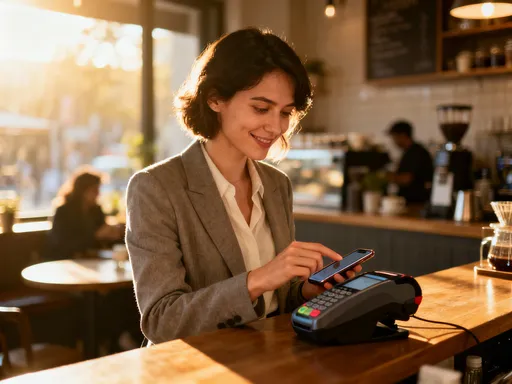
It was a rainy Tuesday morning, and I was trying to grab a quick coffee before dropping the kids at school. The line moved fast—until it got to me. I pulled out a crumpled five-dollar bill, then a few loose coins from the bottom of my tote. The barista smiled politely, but I could feel the weight of the people behind me shifting impatiently. Someone’s phone buzzed. Another cleared their throat. I finally handed over the money, got my change, and stepped aside, cheeks warm. Meanwhile, the next person simply held their phone near the terminal and walked off with their latte in seconds.
That moment stayed with me. It wasn’t just about coffee. It was about feeling out of sync with the world around me. I started noticing how often digital payments came up—in grocery stores, at school fundraisers, even at the park when buying tickets for the kids. My friends were splitting dinner bills with a quick app, while I was still pulling out my wallet and trying to do mental math. I didn’t realize it at the time, but what I was experiencing wasn’t just inconvenience—it was a quiet loss of confidence. I felt like I was missing a basic life skill that everyone else had picked up naturally.
And honestly? It made me feel a little invisible. Like I wasn’t quite keeping up. I began to wonder—was I the only one? Then one afternoon, I overheard two women at the PTA meeting talking about how they used an app to split the cost of classroom supplies. One said, ‘I just sent it right from my phone last night.’ The other laughed and said, ‘Same! No more chasing people for cash.’ I sat there, nodding along, but inside I was thinking, ‘How do you just “send” money like that?’ That was the moment I knew I couldn’t keep pretending it didn’t matter. It did. Not because I wanted to be trendy, but because I wanted to feel capable, in control, and included.
Starting Small: My First Steps Without Fear
I didn’t jump in all at once. That would’ve been too much. Instead, I made a promise to myself: I’d start small, go slow, and be kind to myself along the way. I decided to begin with just one thing—adding my debit card to a mobile wallet I already had on my phone. It felt strange at first, like I was letting a machine hold something personal. But I reminded myself: this wasn’t about giving up control. It was about making life easier.
I watched a short video from my bank’s website—nothing too technical, just a step-by-step guide on how to set up my digital wallet. Then, one quiet afternoon, I did it. I opened the app, followed the prompts, and added my card. It took less than five minutes. I didn’t link my main credit card or anything big. I picked the one with the lowest limit—just in case. I told myself, ‘If something feels off, I can remove it anytime.’ That safety net made all the difference.
My first real transaction was at a small convenience store near my gym. I went in for water and a snack after class. When I got to the counter, I hesitated. My hand went to my purse, but then I stopped. ‘I’m going to try this,’ I whispered under my breath. I pulled out my phone, held it near the terminal, and—nothing happened. My heart dropped. Then I remembered: I had to wake the phone first. I unlocked it, tried again, and heard the soft chime. ‘Payment successful,’ the screen said. I smiled so wide the cashier noticed. ‘First time?’ she asked. I nodded. ‘You’ll get the hang of it,’ she said kindly.
That one small win changed everything. It wasn’t about the $3.49 I spent. It was about proving to myself that I could do it. I didn’t need to understand every detail of encryption or data security to make it work. I just needed to try. And when I made a mistake? It wasn’t a failure. It was feedback. Like when I accidentally double-tapped and got charged twice—I learned to always check the screen before walking away. Each little moment built my confidence, one tap at a time.
How Digital Payments Became a Family Skill
Once I got comfortable, I realized this wasn’t just about me. It was something I could share with my family—especially my teenage daughter, who was starting to manage her own money. She had a part-time job at a bookstore and was saving for a laptop. I suggested we try using a mobile payment app together so she could track her spending more easily. At first, she rolled her eyes. ‘Mom, everyone already does this.’ But when I showed her how to set it up safely, using a card with a spending limit, she got curious.
We sat at the kitchen table one evening, phones in hand. I walked her through adding her card, turning on transaction alerts, and setting up a nickname for her account—hers was ‘Laptop Fund.’ Within a week, she was using it to pay for school lunches, concert tickets, and even splitting rides with friends. One night, she said, ‘This is kind of cool. I can actually see where my money goes.’ That was the moment I realized—this wasn’t just about convenience. It was becoming a quiet teacher of financial responsibility.
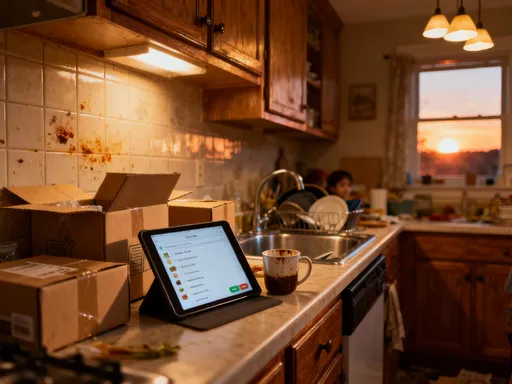
My husband and I also started using a shared budgeting app for household expenses. We linked our grocery shopping to a joint list with spending limits. Every time one of us made a purchase, the other got a notification. It wasn’t about control—it was about teamwork. We stopped the old arguments about ‘Who bought the expensive cheese again?’ and started having real conversations about our spending habits. One night, over dinner, I said, ‘Did you know we spent $80 on snacks last month?’ He laughed and said, ‘Yeah, but look—we saved $50 on gas because we’re planning trips better now.’ It turned into a moment of connection, not conflict.
Even our younger son got involved. He’s only ten, but we gave him a small allowance loaded onto a prepaid card he could use with our approval. He learned to check his balance before buying things, and we used the app to show him how saving works. ‘If I don’t buy candy this week, I can get that toy next month,’ he said one day. My heart swelled. These tools weren’t just making payments easier—they were helping us teach our kids about money in a way that felt real, not theoretical.
Beyond Convenience: The Unexpected Emotional Benefits
I’ll admit, I thought digital payments were just about speed and ease. But what surprised me most was how much more emotionally secure I began to feel. I used to worry constantly about losing my wallet—especially when traveling. Once, on a trip to visit my sister, I left it in a taxi. I had to cancel cards, wait days for replacements, and scramble to cover expenses. It was stressful and exhausting. Now, even if I misplace my wallet, my phone is still with me. I can freeze cards instantly, check recent transactions, and keep moving. That peace of mind is priceless.
Last winter, my mom had a minor fall and needed help with some bills while she recovered. I was able to send her money for her heating bill in less than a minute—no check, no trip to the post office, no waiting. She called me the next day and said, ‘That came through so fast. I didn’t have to worry.’ That small act made me realize how powerful these tools can be in moments of care. It’s not just about spending—it’s about supporting the people you love, instantly and reliably.
There’s also something quietly empowering about seeing your spending history laid out clearly. No more guessing if you paid the electric bill or not. No more sticky notes with scribbled reminders. I started noticing patterns—like how often I ordered takeout on busy nights or how much I spent on coffee over a month. Instead of feeling guilty, I used it as information. ‘Next week, I’ll pack lunches,’ I told myself. It became less about restriction and more about awareness. And that shift—from stress to control—made me feel calmer, more centered, more like myself.
I also found that using digital payments helped me feel more independent. As a mom, it’s easy to feel like you’re always relying on someone else—your partner, your parents, your kids. But being able to handle my own finances smoothly, without asking for help, gave me a quiet sense of pride. I wasn’t just keeping up. I was taking charge. And that confidence started to spill into other parts of my life in ways I didn’t expect.
Learning from Real Life, Not Tutorials
I tried watching online tutorials at first, but they overwhelmed me. So many buttons, so many options, so much jargon. ‘Tokenization,’ ‘NFC,’ ‘two-factor authentication’—it sounded like another language. I realized I didn’t need to understand every technical detail to use the tools well. What I needed was real practice, in real moments.
So I started using my digital wallet for small, low-pressure purchases. A bottle of water. A magazine. A parking meter. Each time, I paid attention—not just to the tap, but to the whole experience. Did the terminal beep? Did I get a notification? Was the amount correct? I treated each transaction like a mini-lesson. And when something didn’t work, I didn’t panic. I just tried again, or asked the cashier for help. Most were happy to walk me through it.
I also started talking to friends about it. Over coffee, I’d say, ‘Hey, how do you split rent with your sister?’ Or, ‘What app do you use for birthday gifts?’ Their answers were simple, practical, and reassuring. One friend showed me how she uses a group payment feature to collect money for birthday presents. Another taught me how to set up automatic bill pay so I’d never miss a due date. These weren’t formal lessons—they were just everyday conversations. But they taught me more than any video ever could.
I learned to embrace confusion as part of the process. Instead of thinking, ‘I’m bad at this,’ I started saying, ‘I’m learning.’ That small shift in mindset made all the difference. I stopped comparing myself to others who seemed to ‘get it’ instantly. I focused on my own pace, my own progress. And slowly, the unfamiliar became familiar. The scary became normal. The impossible became routine.
Building Confidence That Spilled Into Other Areas
Here’s what I didn’t expect: mastering digital payments gave me the courage to try other tech tools I’d been avoiding. I’d always stayed away from online banking, afraid I’d make a mistake. But after successfully managing my digital wallet, I thought, ‘If I can do this, maybe I can do that too.’ So I logged in, explored the interface, and set up automatic transfers to my savings. It felt like a win.
Then I tried a smart home device—a simple voice assistant that helps me set reminders, play music, and even turn off lights. I used to think those were for ‘tech people.’ But now, I talk to mine like it’s part of the family. ‘Hey, remind me to pick up the dry cleaning.’ ‘Play my morning playlist.’ It’s not magic—it’s just helpful. And I realized I didn’t need to be a genius to use it. I just needed to be willing to try.
I even downloaded a fitness app to track my walks. At first, I thought, ‘I don’t need a phone to tell me I walked a mile.’ But then I saw how it helped me stay consistent. I started setting small goals—10,000 steps, five days a week. The app cheered me on with little notifications. I laughed at first, but then I realized—why not let technology support me? It wasn’t replacing my effort. It was amplifying it.
The biggest change was in my mindset. I stopped saying, ‘I can’t do this.’ I started saying, ‘Let me try.’ That shift didn’t happen overnight. It grew from the confidence I built through small, repeated successes. Each time I tapped my phone and it worked, I proved to myself that I was capable. And that belief—quiet but steady—began to shape how I approached everything, from home repairs to planning vacations. I wasn’t just learning tech. I was learning to trust myself.
Your Turn: A Friendly Roadmap to Start Today
If you’re reading this and thinking, ‘That sounds nice, but I don’t know where to start,’ I see you. I was there too. And I want you to know—this isn’t about becoming a tech expert. It’s about making your life a little easier, one small step at a time. You don’t need the newest phone or the fanciest app. You just need the willingness to try.
Start with one thing. Pick one digital payment method—maybe your phone’s built-in wallet or an app your bank offers. Add one card. Try using it for one small purchase this week—your morning coffee, a bus ticket, a snack. Do it in a quiet moment, when you’re not in a rush. If it doesn’t work the first time, that’s okay. Try again. Ask for help if you need it. You’re not alone.
Make it a habit. Use it once a week, then twice. Turn it into a conversation at home. Say to your partner, ‘Let’s try splitting the grocery bill this way.’ Or to your teen, ‘Want to help me set this up?’ Learning together makes it less intimidating and more fun. Share your wins, even the tiny ones. ‘I paid with my phone today!’ That’s worth celebrating.
And please, be gentle with yourself. You don’t have to master everything at once. This isn’t a race. It’s a journey toward more ease, more control, and more peace of mind. You’re not doing this to keep up with the world. You’re doing it to take better care of yourself and your family. Every tap is a step toward confidence. Every small win adds up.
So go ahead. Try it. One tap. One step. One moment of ‘I did it.’ Because you can. And once you start, you might just find—like I did—that it’s not just about payments. It’s about living with more grace, more ease, and more trust in yourself. And that? That’s worth every try.