More Than Just Alerts: How Vehicle Monitoring Helped Our Family Communicate With Care
Driving used to be a source of worry in our home—especially when my teenager hit the road for the first time. I’d bite my nails wondering: Are they speeding? Did they arrive safely? But what changed wasn’t just peace of mind—it was how we began talking. With a simple vehicle safety app, silent drives turned into shared check-ins, misunderstandings faded, and care started flowing both ways. It didn’t just track a car; it opened a gentler kind of conversation. What I thought would feel like surveillance turned out to be the very thing that brought us closer. And honestly, if you’ve ever stared at your phone waiting for a text that says “I’m home,” you already know this kind of love—it’s the quiet kind, the kind that watches the clock a little too closely.
The Quiet Worry No One Talks About
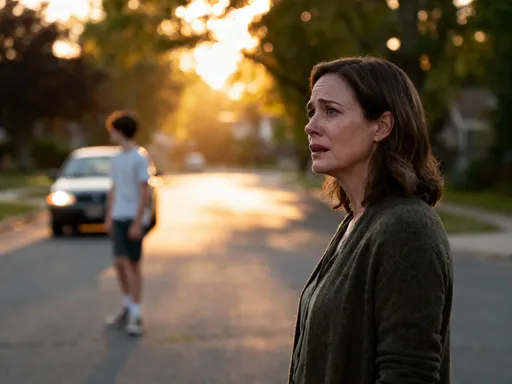
Let’s be real—no one likes to admit they’re that parent. The one sending three “Where are you?” texts in ten minutes. The one who checks the driveway ten times after dark. But here’s the truth: that worry isn’t about control. It’s about love. And for years, I carried it in silence, thinking I was the only one who felt that knot in my stomach every time my daughter pulled out of the driveway. She was responsible, smart, careful—but she was still new behind the wheel. And I was still her mom.
I remember one rainy Thursday, she was coming home from a study group. Fifteen minutes past curfew, no call, no text. My imagination ran wild—flat tire, wrong turn, worse. By the time her headlights finally swept across the porch, I was already halfway to the door, heart pounding. When she walked in, soaked and surprised to see me so tense, all I could manage was, “You’re late.” Her face fell. “I’m *one* minute late,” she said. And she was right. But the number didn’t matter. What mattered was the fear I couldn’t name and the way it kept turning our reunions into arguments.
It wasn’t just her. My husband, who’s driven for over thirty years, started taking longer work trips. When his job moved him to a new regional office an hour away, I’d find myself refreshing the weather app, imagining icy roads or sudden downpours. Even my mother, in her seventies and perfectly capable, made me nervous when she drove to her weekly bridge club. I didn’t want to nag. I didn’t want to sound overbearing. But I also didn’t want to lose anyone I loved to something as ordinary as a missed stop sign.
The real problem wasn’t the driving. It was the silence between us. The lack of information made space for anxiety to grow. And the way we tried to manage it—constant calls, repeated questions—often pushed the people we loved away. We were trying to say “I care,” but it kept coming out as “I don’t trust you.” That disconnect hurt more than I wanted to admit.
When Technology Listened to Our Real Needs
Then one day, a friend mentioned an app she used with her son. “It’s not about spying,” she said. “It’s about knowing.” I was skeptical. The idea of tracking anyone—even my own child—felt invasive. But she showed me how it worked: no live video, no constant pings. Just gentle alerts—“Car turned on,” “Arrived at school,” “Speed exceeded 75 mph.” Nothing dramatic. Nothing harsh. Just information, delivered calmly, like a quiet update from a trusted friend.
That’s when I realized: this wasn’t surveillance. It was support. The technology wasn’t built for big corporations or law enforcement. It was made for families like ours—people who love deeply and worry quietly. Using GPS and mobile data, these tools create a shared awareness without demanding constant communication. Think of it like a digital porch light—always on, always reassuring, but never intrusive.
What surprised me most was how thoughtfully these apps were designed. They don’t bombard you with data. Instead, they offer just enough—a notification when the car leaves, a summary at the end of the day. Some even send a friendly reminder if the driver is speeding, not as a warning, but as a nudge: “Hey, slow down a little.” And because most work through smartphones or small plug-in devices, there’s no complicated setup. You don’t need to be a tech expert. You just need to care.
More importantly, these tools were built with privacy in mind. You can’t track someone without their knowledge. Everyone has to agree. That consent piece changed everything for us. It wasn’t me imposing control. It was us choosing care—together. My daughter didn’t see it as being watched. She saw it as being looked out for. And that shift in perspective? That was the beginning of real trust.
From Tension to Trust: A Shift in Family Conversations
The first time the app told me my daughter had left school, I almost didn’t believe it. No text. No call. Just a quiet chime on my phone: “On the way home.” I stared at it, waiting for the old anxiety to rise. But it didn’t. Because now I *knew*. And that tiny piece of information—so small, so simple—freed me from the urge to call. That day, when she walked in, I wasn’t tense. I was waiting with a smile. “How was your day?” I asked. Not “Why are you late?” Not “Were you speeding?” Just a real question, from a real place.
And her answer? “Actually… really good.”
That moment was a turning point. We stopped having the same fights about timing and speed. Instead, we started talking about what really mattered—her math test, her friend’s birthday, the song she played three times on the drive home. The data didn’t replace conversation. It made space for better ones. When an alert showed she’d driven over the speed limit, I didn’t jump to conclusions. I waited. Later, over dinner, I said, “I saw you were going a little fast near the highway entrance. Everything okay?” She sighed. “Yeah, I was just trying to beat the light. But I slowed down after.” No defensiveness. No eye roll. Just honesty.
For my husband, it was different. He didn’t need constant updates, but knowing I could see when he’d safely arrived at his office made a difference. One winter morning, a storm rolled in fast. I checked the app and saw his car was still moving—steady, on schedule. That small reassurance kept me from calling him while he was driving, which he appreciated. “It’s nice,” he said later, “knowing you’re not sitting at home worrying.”
Even with my mom, it helped. She agreed to use a simple check-in feature. Now, when she reaches her destination, I get a message: “Mom has arrived.” I don’t call. I don’t ask. But I breathe easier. And when I do see her, our time together feels lighter, more present. We’re not starting with “Did you drive carefully?” We’re starting with “How’s your tea?” That’s the kind of peace that doesn’t come from control—it comes from connection.
Cultivating Responsibility as a Shared Hobby
Here’s something I never expected: reviewing drive summaries became something we actually looked forward to. Sounds strange, right? But it wasn’t about pointing fingers. It was about growing together. Every Sunday evening, over hot chocolate, my daughter and I would sit down and look at her weekly driving report. Not every detail—just the highlights. How many trips? Any hard stops? Any times she sped?
At first, she was nervous. “Am I in trouble?” she asked the first time. “No,” I said. “This isn’t about punishment. It’s about learning. We’re a team.” And slowly, she started to see it that way. One week, she noticed she’d had three smooth starts in a row. “Look!” she said, pointing at the screen. “I’m getting better.” Another time, she saw a sudden brake alert and remembered a deer had darted across the road. “That makes sense,” she said. “I didn’t even think to tell you.”
These moments weren’t about shame. They were about awareness. About building confidence. And about showing her that I wasn’t just watching for mistakes—I was noticing the good, too. Over time, she started sharing insights on her own. “I think I need to leave earlier so I’m not rushing.” “Maybe I should avoid that road when it rains.” She wasn’t being told what to do. She was figuring it out—and that made all the difference.
We even turned it into a little game. “Let’s see if you can get five green days in a row,” I’d say. Green meant no speeding, no harsh braking. It wasn’t about perfection. It was about progress. And when she hit her goal? We celebrated with her favorite dinner. Not because she “passed a test,” but because she was growing into someone thoughtful, responsible, and kind—not just on the road, but in life.
And you know what? The same mindset started showing up in other areas. She began planning her homework earlier. She remembered to charge her phone. She even started offering to drive her younger brother to practice. The app didn’t make her responsible. It gave us a way to talk about responsibility—without lectures, without tension. It became a shared practice, like cooking together or walking the dog. A quiet way of saying, “We’re in this together.”
Clearer Communication, Deeper Connection
One of the most unexpected gifts of this technology was the space it created in my mind. Before, I carried the weight of not knowing. Now, that mental load is lighter. I’m not constantly calculating arrival times or imagining worst-case scenarios. And that freedom? It’s allowed me to be more present in other ways.
I listen more. I ask better questions. I laugh more easily. Because I’m not starting every conversation from a place of fear, I can end them with warmth. When my daughter walks in now, I see her—not just the driver, not just the latecomer, but the young woman she’s becoming. And she feels that. She’s more open. More willing to share. More likely to say, “Mom, can I talk to you about something?”
It’s not just about driving. It’s about how we show up for each other. The app didn’t fix our relationship. But it removed a barrier that was keeping us from connecting. It turned uncertainty into understanding. It turned anxiety into action—gentle, loving action. And in doing so, it reminded us that care doesn’t have to be loud to be powerful.
I’ve even noticed a change in how my husband and I talk. We don’t hover over each other’s movements. But knowing we can check in—without calling, without interrupting—has made us feel more connected, not less. It’s like having a quiet thread between us, one that says, “I’m here. You’re safe. We’re okay.”
And that’s the heart of it. Technology didn’t replace our humanity. It protected it. It gave us back the emotional energy we’d been wasting on worry and let us pour it into love instead. We’re not just safer on the road. We’re kinder at home.
Making It Work for Your Family (Without the Awkwardness)
If you’re thinking about trying something like this, I get it—there’s a real fear of making it feel like surveillance. The key, I’ve learned, is how you introduce it. It can’t feel like a punishment. It has to feel like protection. Like care. Like a choice.
Start with a conversation—not about tracking, but about peace of mind. Say something like, “I know you’re a great driver. But I worry. And I don’t want my worry to turn into nagging. Is there a way we can both feel better about your drives?” Let them be part of the decision. Let them pick the app, set the alerts, choose what to share.
Look for tools that emphasize safety, not control. Features like “Do Not Disturb While Driving” are a great sign—they show the app is designed to help, not hinder. Some apps even let drivers pause tracking during personal trips, which builds trust. And always, always respect privacy. No checking every five minutes. No using data to argue. The goal isn’t to catch someone doing something wrong. It’s to support them in doing things right.
Set expectations together. Maybe you only get arrival notifications. Maybe speed alerts only go off above 15 mph over the limit. Maybe you agree to review reports once a week, not every day. Make it a family agreement, not a parental rule. And if someone feels uncomfortable, listen. Adjust. This isn’t about winning. It’s about caring well.
And remember: the tone matters. Instead of saying, “I’m going to track you,” try, “I’m going to use this so I can stop worrying and start trusting.” Small words, big difference. One mom I spoke with told her daughter, “I’m not watching you. I’m just sleeping better knowing you’re safe.” That simple reframe changed everything.
Peace That Grows: When Safety Becomes a Way of Caring
It’s been over a year now since we started using the app. My daughter still drives the same car. The roads haven’t gotten any safer. But our home? It feels different. Lighter. Kinder. More connected. The arguments about timing have faded. The late-night worries have quieted. And in their place, something deeper has grown—not just trust, but understanding.
I see now that this wasn’t really about technology. It was about finding a new language for love. One that doesn’t rely on questions or demands, but on quiet presence. On shared care. On the unspoken message that says, “You matter. Your safety matters. And I’m here.”
The app didn’t make us perfect. We still have tough days. We still misunderstand each other sometimes. But now, when tension rises, we have a foundation of trust to return to. We have a shared practice of looking out for one another—not just on the road, but in life.
And maybe that’s the most beautiful part. This little tool didn’t just protect our family from accidents. It helped us grow emotionally. It taught us how to care without smothering. How to trust without ignoring. How to love in a way that gives space, not takes it away.
So if you’re sitting there, staring at the clock, wondering where your loved one is—know this: you’re not alone. And there’s a gentler way forward. It’s not about watching every move. It’s about creating peace. It’s about saying, in the quietest way possible: *I care. I trust. I’m here.* And sometimes, that’s the most powerful thing we can offer.