From Frustrated to Fluent: How Evening Language Practice Finally Felt Natural
You’ve tried language apps before—downloaded them with hope, used them for a few days, then let guilt creep in when you missed streaks. But what if learning didn’t feel like another task on your to-do list? What if, instead, it became a quiet, comforting ritual at the end of your day? I discovered that tracking my progress gently—and practicing during calm evening moments—changed everything. It wasn’t about speed or perfection. It was about consistency, comfort, and finally feeling at ease with myself in a new language. And the best part? The technology that once felt overwhelming became a gentle companion in my journey—not a judge, not a drill sergeant, but a quiet guide walking beside me.
The Evening Struggle: Why Language Learning Felt Like a Chore
Let’s be honest—how many times have you downloaded a language app with real excitement, maybe even told your family, ‘This is the year I learn Spanish!’ Only to open it two days later, squint at a rapid-fire quiz, fail to recall the word for ‘tomorrow,’ and close it with a sigh? I’ve been there, more times than I can count. The problem wasn’t me. It wasn’t the language. It was the timing, the tone, and the tools. Most language apps are built for short bursts of energy, like morning workouts for your brain. But evenings? That’s a different story. By the time dinner’s done, the kids are in bed, and the laundry’s folded, your brain isn’t craving high-pressure drills. It’s craving rest.
Yet, so many apps treat language learning like a sprint. Timed exercises. Red X’s for wrong answers. Bright, jarring notifications that feel like alarms. And don’t even get me started on those streak counters—innocent at first, but soon turning into tiny guilt-trips. Miss one day? The app might not say it outright, but you feel it: ‘You’ve broken your streak. You’ve failed.’ As if learning a language were a competition with a leaderboard. I remember one night, sitting on the couch after a long day, trying to repeat a simple phrase in French. My mouth felt heavy. My thoughts were slow. And the app kept saying, ‘Try again! Speak clearly!’ I nearly threw my phone across the room. Not because I didn’t want to learn—but because it felt like the tool was working against me, not with me.
That’s when I realized: maybe the problem wasn’t my motivation or my memory. Maybe it was the mismatch between how these tools were designed and how I actually live my life. We’re not machines. We’re emotional, tired, busy humans—especially in the evenings. And if technology doesn’t account for that, it won’t stick. It’s not enough for an app to be smart. It has to be kind. It has to understand that progress isn’t always loud. Sometimes, it’s a whisper. And sometimes, the most important thing isn’t what you learn—but how you feel while learning it.
A Shift in Mindset: Learning as Self-Care, Not Homework
The real turning point came when I stopped thinking of language practice as something I ‘had to do’ and started seeing it as something I ‘got to do’—a small gift to myself at the end of the day. I used to view it like homework, something I’d squeeze in before bed, often while multitasking—half-watching TV, half-listening to a lesson, barely retaining anything. But when I shifted my mindset, everything changed. What if, instead of rushing through a lesson, I treated it like I do my evening cup of chamomile tea? Something slow. Something soothing. Something just for me?
I began setting the intention: this isn’t about how many words I memorize. It’s about showing up for myself. So instead of pushing through five lessons, I’d do one—slowly. I’d listen to a native speaker say a simple sentence like ‘I’m proud of how far I’ve come’ and repeat it three times, not to get it perfect, but to feel the rhythm of the language in my mouth. I’d close my eyes and focus on the sound, the melody, the way the words made me feel. And something surprising happened: I started looking forward to it. It became less about achievement and more about presence.
This is where technology, when used wisely, can actually support emotional well-being. Think about it—when you use a language app that encourages you, that speaks in a calm voice, that doesn’t rush you, it’s not just teaching vocabulary. It’s teaching you to be patient—with the language, and with yourself. I started noticing how my breathing slowed during these sessions. How my shoulders dropped. How my mind, usually racing with tomorrow’s to-do list, finally settled. Language learning became a form of mindfulness. And in that quiet space, real progress began to grow—not because I was trying harder, but because I was trying softer.
That shift—from pressure to peace—was everything. I wasn’t chasing fluency anymore. I was cultivating calm. And in that calm, I found a deeper connection to the language, and to myself.
The Right Tools for Calm Learning: Designing a Soothing Routine
Not all language apps are created equal—especially when it comes to evening use. Some feel like a pop quiz from your high school teacher. Others feel like a gentle conversation with a friend. The difference? Design. I learned this the hard way. I tried one app that played loud beeps every time I got an answer wrong. Another forced me into timed conversations with AI voices that sounded annoyed when I paused too long. It wasn’t just unhelpful—it was stressful. And stress, especially at night, is the enemy of learning. Your brain doesn’t absorb new information when it’s in fight-or-flight mode. It needs safety. It needs space.
So I started looking for apps that felt different. Apps with dark mode, so the screen didn’t blast my eyes in a dim room. Apps that let me slow down the playback speed, so I could really hear each syllable. Apps that used real human voices—warm, clear, unhurried—instead of robotic text-to-speech. And most importantly, apps that didn’t make me feel bad for taking my time. I found one that gave me a simple summary at the end of each session: ‘Great job! You practiced 12 new phrases this week.’ No red marks. No penalties. Just quiet recognition.
One feature I loved was voice recognition that didn’t judge. You know the kind—where you say a sentence, and it either gives you a green check or a red X? I avoided those. Instead, I found an app that showed my pronunciation as a gentle wave on a graph, letting me compare my voice to the native speaker’s without shame. I could try five times, and it would just say, ‘Getting closer!’ No pressure. No perfectionism. Just progress.
And here’s the thing: these aren’t just ‘nice-to-have’ features. They’re essential for sustainable learning, especially for someone like me—someone juggling a full life, who doesn’t have hours to spare. The right tool doesn’t just teach you a language. It respects your energy. It meets you where you are. It says, ‘I see you. You’re tired. Let’s do this gently.’ And when technology feels like that, it stops being a chore and starts feeling like care.
Tracking Progress Without Pressure: Celebrating Tiny Wins
For years, I thought progress meant numbers: 30-day streaks, 500 words learned, leaderboards. But here’s what I’ve learned: when your tracking system is built on comparison and competition, it’s easy to feel like a failure. Missing one day breaks your streak. Getting one answer wrong lowers your score. And before you know it, you’re not learning to speak a language—you’re learning to chase numbers.
I wanted something different. Something kinder. So I started tracking my progress in a way that honored how I actually felt. Instead of counting streaks, I began saving voice notes every Sunday night. Same time. Same quiet corner. Same phrase: ‘This week, I feel a little more confident.’ I’d play the old ones every few weeks, and you know what? I could hear the change. My pronunciation was smoother. My pace was more natural. I wasn’t fumbling over words as much. It wasn’t dramatic—but it was real.
Some apps now offer progress insights that feel supportive, not stressful. Instead of saying, ‘You got 3 out of 10 right,’ they say, ‘You’ve used 45 new words this week—great job!’ Or, ‘Your speaking fluency has improved by 20% over the past month.’ Even if that number is an estimate, the message matters: you’re growing. You’re moving forward. And it’s not about being perfect. It’s about showing up.
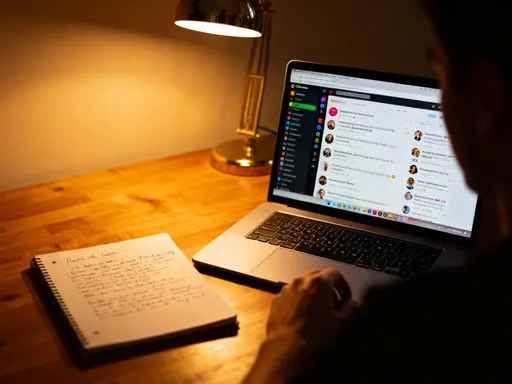
I also started keeping a small journal—not for grammar rules, but for moments. Like the first time I dreamed in Spanish. Or when I caught myself thinking, ‘I need to buy milk,’ in French while standing in the grocery store. Those weren’t testable skills, but they were proof. Proof that the language was sinking in. Proof that I was changing, not just my vocabulary, but my inner world.
When you track progress this way—quietly, personally, emotionally—you stop seeing yourself as behind. You start seeing yourself as on your way. And that makes all the difference.
Creating the Perfect Evening Environment
Where you learn matters as much as how you learn. I used to practice in bed, phone in hand, lights off, half-distracted by my thoughts. No wonder I didn’t retain much. Then I decided to create a real space for it—a small corner of my living room with a cozy chair, a soft throw blanket, and a small lamp with warm light. I call it my ‘language nook.’ It’s not fancy, but it’s mine.
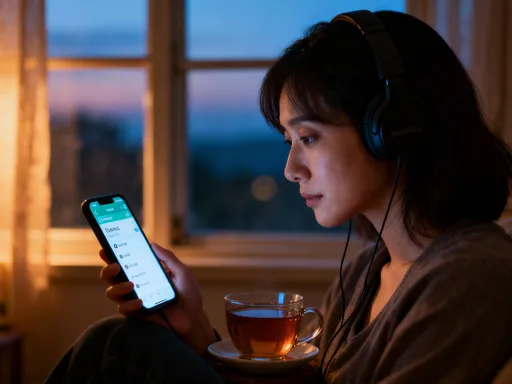
I also started using noise-canceling headphones. Not because my house is loud, but because they help me focus. They create a bubble of calm. And I pair my practice with a cup of herbal tea—peppermint or passionflower—something that tells my body, ‘It’s time to slow down.’ The ritual itself became part of the learning. The lighting. The tea. The quiet. They all signal to my brain: this is safe. This is restful. This is for me.
I put my phone on ‘Do Not Disturb’—no calls, no texts, no pings. And I choose apps that don’t push notifications at night. Nothing kills a peaceful moment like a sudden buzz saying, ‘Don’t forget to practice!’ If I’ve already decided to practice, I don’t need to be reminded like a child. I need space to breathe.
This isn’t just about language. It’s about reclaiming my evenings. Instead of scrolling mindlessly, I’m doing something that feels meaningful. Instead of feeling drained, I feel renewed. And that’s the power of environment: when you design a space that supports your goals and your well-being, progress doesn’t feel like work. It feels like coming home.
Real-Life Results: How This Changed More Than Just My Language Skills
Of course, my vocabulary grew. My pronunciation improved. I can now order coffee in Italian without pointing at the menu. But the real changes were deeper. I started sleeping better. Not because language learning is a sleep aid, but because the routine calmed my mind. Instead of lying in bed replaying the day’s stresses, I’d fall asleep thinking about the gentle rhythm of a French sentence I’d practiced. My anxiety levels dropped. My confidence grew—not just in speaking, but in trying new things. I proved to myself that I could build a habit that felt good, not guilty.
I also noticed how this practice spilled over into other areas. I became more patient with my kids. More present with my partner. More kind to myself when I made mistakes. Because if I could give myself grace while learning a language, why not in life? The skills I was building weren’t just linguistic. They were emotional. Resilience. Patience. Self-compassion. These are the quiet superpowers no one talks about.
And perhaps the most unexpected shift? I started thinking in the new language during quiet moments—while folding laundry, walking the dog, or sipping tea. Not full sentences, but little phrases. ‘This is peaceful.’ ‘I’m doing my best.’ It wasn’t forced. It was natural. And in those moments, I didn’t feel like I was ‘studying.’ I felt like I was living.
That’s when I realized: this wasn’t just about learning a language. It was about becoming someone who learns with kindness. Someone who values progress over perfection. Someone who knows that small, consistent steps—aligned with her rhythm—can lead to real change. And that’s a skill that lasts far beyond any single app or lesson.
How You Can Start Tonight—Without Overthinking It
You don’t need a perfect plan. You don’t need to commit to an hour a day or download five apps. You don’t even need to know which language you want to learn yet. All you need is one quiet moment tonight—five minutes, maybe ten—and the willingness to try.
Find a cozy spot. Turn off the bright lights. Put on your favorite sweater. Brew a cup of tea. Open a language app that feels gentle, not demanding. One that speaks in a calm voice, not a buzzer. And just say one sentence out loud. It can be something simple: ‘My name is Sarah.’ ‘I am learning.’ ‘Tonight, I feel calm.’ Don’t worry about getting it right. Just notice how it feels to say it. Notice the shape of your mouth. The sound in your ears. The way your chest rises.
Afterward, don’t check a score. Don’t look at a streak. Just ask yourself: how do I feel? Calmer? Prouder? More present? That’s your real progress. That’s the win.
Do this once. Then do it again tomorrow. And the next night. Not because you have to, but because it feels good. Because it’s yours. Because in a world that never stops asking for more, this is a rare moment where you’re not giving anything away—you’re giving to yourself.
Technology doesn’t have to be loud, flashy, or stressful. When used with intention, it can be a quiet force for growth, calm, and connection. You don’t have to become fluent overnight. You just have to become a little more at ease—with languages, with tools, and with yourself. And that? That’s worth every soft-spoken sentence.