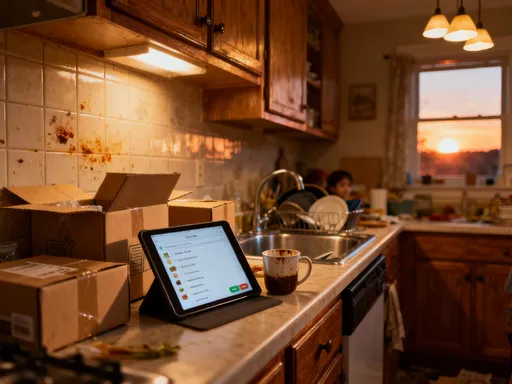
I kept saying ‘We’ll figure it out later’—until our family’s online shopping chaos finally made me act
Remember those evenings scrolling endlessly, trying to find the right school supplies while your partner orders paper towels again—twice? We’ve all been there. What started as a simple click turned into cluttered carts, missed deliveries, and family frustration. It wasn’t just about forgetting batteries or getting the wrong size of socks. It was about feeling scattered, stretched too thin, and constantly playing catch-up. But slowly, without realizing it, we learned to turn that chaos into calm. This is how online shopping platforms quietly became our family’s most reliable helper—one small, thoughtful step at a time.
The Moment Everything Felt Out of Control
It wasn’t one big disaster that made me stop and say, “We can’t keep doing this.” It was the slow drip of small failures—like when my daughter’s birthday party supplies arrived two days late because we’d accidentally deleted the order confirmation. Or when my son needed new running shoes for gym class and we realized we’d already bought two pairs in the past month—both still in their boxes. I kept saying, “We’ll figure it out later,” but later never came. Instead, we were stuck in a loop: panic, click, forget, repeat.
Our digital lives were a mess. Browser tabs were open for weeks—“backpacks under $40,” “dish soap refill packs,” “birthday gift for Aunt Linda.” We were all shopping separately, with no coordination, no memory, and no system. My partner thought I’d ordered the dog food. I thought he had. The cat’s prescription diet showed up three weeks late, and the vet bill for the extra check-up stung more than the food ever would. It wasn’t just about money. It was about trust. We were letting the small things erode the quiet foundation of our family rhythm.
Then came the morning I opened the pantry and found three unopened boxes of pasta, two bottles of olive oil, and a family-sized jar of peanut butter I didn’t remember buying. That’s when it hit me: we weren’t managing our home. We were reacting to it. And every time we clicked “Buy Now,” we were adding more noise instead of more peace. That moment of overwhelm wasn’t just frustration—it was clarity. We needed a change, not because the technology was failing us, but because we weren’t using it with intention. And so, quietly, I decided to try something different.
Starting Small: One List to Rule Them All
The first thing I did wasn’t flashy or high-tech. I didn’t download a new app or sign up for a premium service. I simply created a shared digital shopping list—something basic, something free, something everyone in the house could access from their phone. I sent the link to my partner and kids with a message: “If you need it, add it. If you see it, check it off.” That was it. No rules, no pressure, just an open invitation to be part of the solution.
At first, it felt silly. My teenager added “spicy chips” and “hair gel” with a sarcastic “you’re so organized now, Mom.” My partner ignored it for two days. But then, something shifted. I noticed “laundry detergent” had been added—by him. Then “cat litter” appeared, checked off the next day. My daughter started adding her favorite tea when we ran out, and one morning, I saw “birthday card for Grandma” sitting at the top of the list, added by my son two weeks before the date. No reminders. No nagging. Just quiet participation.
That list became more than a tool. It became a mirror of our care. Seeing “Mom’s favorite oat milk” added without me saying a word felt like a small act of love. It wasn’t just about efficiency—it was about feeling seen. We stopped asking, “Did you get the toothpaste?” and started trusting that if it was on the list, it would be handled. Over time, the list evolved. We started tagging items by store or priority. We added notes like “urgent” or “wait for sale.” It wasn’t perfect, but it was ours. And in that shared space, we rebuilt a sense of teamwork we hadn’t realized we’d lost.
Learning to Trust the Tools (Even When We Resisted)
Let’s be honest—none of us were natural tech adopters. My partner still calls Siri “that lady in the phone,” and I once spent 20 minutes trying to figure out why my calendar wouldn’t sync—only to realize I was logged into my daughter’s account. So when I suggested we start using delivery tracking, saved addresses, and automatic reordering, I was met with eye rolls and jokes about “big brother watching our paper towel habits.”
But then we missed something important. My son’s science fair was on a Tuesday. He needed glue sticks, poster board, and a specific kind of tape—none of which we had. I’d seen the note, I’d even added it to my mental list, but between work calls and dinner prep, it slipped through. We ended up driving to three stores at 8 p.m., only to find one had the board but not the tape, another had tape but was out of glue. We came home stressed, late, and empty-handed. He cried. I cried. And that night, my partner said, “Maybe we should just let the apps help.”
So we tried. We set up saved addresses so orders wouldn’t go to the old apartment. We turned on delivery alerts and allowed notifications. We picked one main platform we all agreed on—not because it was the fanciest, but because it was the one we all used most. And slowly, things started to change. The first time dinner ingredients showed up exactly when we needed them—chicken, veggies, and spices, all at once—we actually cheered. Not because it was revolutionary, but because it was relief. The tools weren’t making our decisions, but they were holding space for us—like a quiet friend who remembers what we forget.
From Survival to Strategy: Building Routines That Stick
Once the basics were under control, we realized we could do more than just survive. We could plan. So we started something simple: a weekly 15-minute “family check-in.” No screens, no distractions—just us, in the kitchen, talking about what we needed for the week. My daughter would say, “I’m running low on shampoo.” My son would remind us his soccer socks are falling apart. I’d mention the coffee was almost gone. My partner would bring up the lightbulbs in the garage.
After the chat, we’d all pull out our phones and update the shared list together. No one was in charge. Everyone had a voice. And slowly, this turned into a rhythm—anticipate, plan, confirm. We began looking ahead, not just reacting. We scheduled bulk orders for back-to-school season in July, not September. We set up automatic deliveries for things we used every month—coffee, pet food, cleaning supplies—so we’d never run out again.
What surprised me most wasn’t the convenience. It was the confidence. We weren’t just avoiding stress—we were building trust in our own system. When the holidays came, instead of last-minute panic, we had a shared gift list with notes like “Dad wants noise-canceling headphones” and “Aunt Sue loves lavender candles.” We started using wish lists not just for gifts, but for family projects—like the garden upgrade we’d talked about for years. The platform didn’t make the decisions, but it helped us remember what mattered. And in doing so, it gave us back our time, our calm, and our ability to follow through.
Unexpected Gains: More Than Just Packages Delivered
I didn’t expect the changes to go beyond shopping. But they did. The fewer arguments we had about forgotten items, the more patient we became with each other. We stopped blaming and started problem-solving. Our budget stretched further because we weren’t buying duplicates or paying rush delivery fees. We even started using price tracking features to wait for sales—something my son now proudly calls “smart shopping.”
But the biggest surprise was how much more connected we felt. Our evenings used to be filled with frantic searches and frustrated sighs. Now, they’re quieter. We have time to sit together, talk about our days, help with homework, or just sip tea without distraction. The platforms didn’t replace family time—they protected it. By automating the small stuff, we made space for the big things: laughter, listening, and just being together.
And here’s the thing I didn’t see coming: I felt less guilty. Less like I was failing as the “home manager.” Less like I had to remember everything. Because now, the system remembered with me. It wasn’t about perfection. It was about partnership—with each other, and with the tools we used. Technology didn’t fix our lives. It simply made room for life to happen, one thoughtful decision at a time.
Teaching the Next Generation, One Click at a Time
I used to think my kids were just passive recipients of our shopping habits. But they weren’t. They were watching. Learning. Absorbing. And now, they’re doing it themselves. My daughter manages her own school supply list—she compares prices, checks reviews, and even waits for discounts. My son tracks delivery dates like a pro. “It’ll be here by 8 p.m.,” he’ll say, not because he’s obsessed with packages, but because he’s learned to plan.
These platforms became invisible teachers. They’re learning responsibility—not because we lectured them, but because they see us modeling it. They’re learning patience—waiting for a better price, or for an item to come back in stock. They’re learning care—adding something to the list because they know someone else will benefit. When my daughter added “extra blankets” after a cold night, she didn’t do it for points or praise. She did it because she could.
And that’s the lesson that matters. It’s not just about buying things. It’s about caring for a shared life. It’s about showing up, paying attention, and making small choices that add up. These digital tools aren’t replacing human values—they’re supporting them. And in that quiet way, they’re helping raise kids who are thoughtful, responsible, and aware of how their actions affect the people around them.
A Calmer Home, Built on Small Digital Steps
Looking back, I can’t point to one moment that changed everything. There was no magic app, no instant fix. It was the slow accumulation of small choices—the shared list, the delivery alert, the weekly check-in, the first time someone added “Mom’s tea” without being asked. It was the trial and error, the forgotten password, the order that went to the wrong address, and the quiet determination to keep trying.
What I’ve learned is this: technology doesn’t have to be complicated to be powerful. It doesn’t have to replace human connection—it can protect it. Online shopping platforms didn’t just deliver groceries and gadgets. They helped us deliver on our promises to each other. To show up. To care. To make life a little easier so we could focus on what really matters.
Our home isn’t perfect. We still forget things. We still argue sometimes. But now, we have a system that helps us recover faster, connect more deeply, and move forward together. Simplicity, care, and connection didn’t come from flawless execution. They came from showing up—again and again—with intention, with love, and with just one thoughtful click at a time.