How Yoga and TCM Taught Me the Power of Daily Rhythm
For years, I chased quick fixes—energy boosts, stress relief, better sleep—but nothing lasted. Then I discovered how traditional Chinese medicine and yoga, when practiced daily, align your body with natural rhythms. It’s not about perfection; it’s consistency. This routine-based harmony changed my energy, focus, and calm in ways I never expected. Let me share how small, regular steps can transform your well-being. What began as a personal search for balance evolved into a deeper understanding of how the body thrives not on intensity, but on rhythm. By integrating gentle, time-honored practices into everyday life, I found a sustainable path to vitality—one that didn’t demand more effort, but smarter, mindful choices repeated with care.
The Burnout That Started It All
Modern life moves fast, and many women in their 30s, 40s, and 50s feel the weight of constant motion—managing households, careers, family needs, and personal expectations. Despite eating nutritious meals and hitting the gym a few times a week, I still felt drained. My energy would spike in the morning, crash by mid-afternoon, and return only in the form of restless nighttime thoughts. Sleep was fragmented, focus was fleeting, and even weekends offered little recovery. I wasn’t alone. Studies show that chronic stress and irregular daily patterns disrupt hormonal balance, weaken immunity, and impair digestion. I had been treating symptoms—caffeine for fatigue, melatonin for sleep, deep breathing only during crises—without addressing the root issue: a lack of rhythm.
The turning point came after a minor illness lingered far longer than it should have. My body, once resilient, now took weeks to bounce back. A trusted friend suggested I look beyond Western solutions and explore how daily habits, not isolated interventions, could restore balance. That’s when I began reading about traditional Chinese medicine and the concept of living in alignment with natural cycles. I also revisited yoga, not as a workout, but as a daily ritual. What surprised me most was not the complexity of these systems, but their emphasis on simplicity and repetition. Healing, I learned, wasn’t about doing more, but about doing the same nourishing things—consistently.
What Is Routine Regularity—And Why It Matters
Routine regularity is the practice of engaging in small, mindful actions at consistent times each day to support the body’s innate cycles. It is not about rigid scheduling or forcing productivity, but about creating a gentle structure that honors the body’s natural ebb and flow. Both traditional Chinese medicine (TCM) and yoga are built on this principle. In TCM, health is seen as the smooth flow of Qi (vital energy) through meridians, influenced by time of day, season, and lifestyle. The body follows a 24-hour organ clock, where each two-hour window is governed by a specific organ system. For example, the liver is most active between 1 a.m. and 3 a.m., making restful sleep during this time crucial for detoxification and emotional balance.
Similarly, yoga teaches that daily practice—even brief—helps regulate the nervous system, shifting the body from a state of stress (sympathetic dominance) to one of restoration (parasympathetic activation). Circadian rhythm science confirms this: exposure to light, meal timing, physical activity, and rest all signal the brain’s internal clock, affecting hormone release, metabolism, and mood. When these signals are erratic—eating late, waking to alarms, scrolling before bed—the body loses its synchrony. Routine regularity restores that connection. It’s not about perfection, but about showing up daily with intention. Over time, these micro-moments of alignment build resilience, improve sleep quality, and enhance emotional stability.
Yoga: More Than Stretching—A Daily Reset
Many people think of yoga as physical exercise focused on flexibility or strength. While those are benefits, yoga’s deeper power lies in its ability to reset the nervous system through three integrated elements: breathwork (pranayama), mindful movement (asana), and stillness (dhyana). When practiced daily, even for just 10 minutes, yoga becomes a moving meditation that trains the body to respond to stress with calm rather than reactivity. The breath is the bridge between mind and body. Simple techniques like diaphragmatic breathing or alternate nostril breathing activate the vagus nerve, which slows heart rate and lowers cortisol levels.
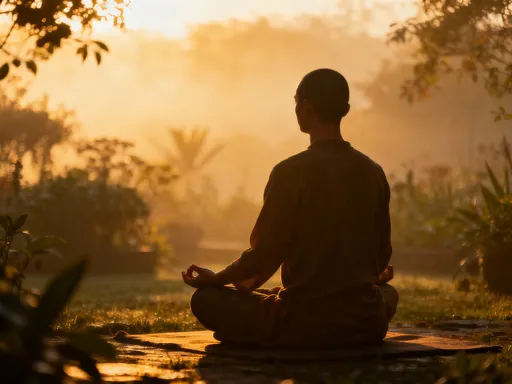
Mindful movement, such as a short sequence of sun salutations or gentle floor poses, increases circulation, releases muscle tension, and improves joint mobility. Unlike high-intensity workouts that can strain an already stressed system, yoga nourishes without depleting. The third element—stillness—is often the most challenging but most transformative. Sitting quietly, even for a few minutes, allows mental chatter to settle and awareness to deepen. Over weeks of consistent practice, many women report clearer thinking, improved digestion, and a greater sense of emotional balance. The key is not duration but regularity. A five-minute morning stretch done every day has more long-term impact than an hour-long session once a week.
TCM Wisdom: Living in Sync with Natural Cycles
Traditional Chinese medicine views health as a dynamic balance of opposing forces—yin (cooling, nourishing) and yang (warming, activating)—and the free flow of Qi through the body’s meridians. Unlike symptom-based approaches, TCM emphasizes prevention through daily habits that support the body’s natural rhythms. One of its core teachings is that each organ system has a two-hour peak period in the 24-hour cycle. For example, the large intestine is most active between 5 a.m. and 7 a.m., which is why many practitioners recommend waking early and drinking warm water to support elimination. The stomach’s peak time is 7 a.m. to 9 a.m., making it the ideal window for a nourishing breakfast.
Simple, non-invasive practices can align with these cycles. Upon waking, checking the tongue—a common TCM self-assessment—can offer clues about internal balance. A pale tongue may suggest Qi deficiency, while a thick coating could indicate digestive stagnation. Staying hydrated with warm or room-temperature fluids supports Qi flow, as cold drinks are believed to slow digestion. Dietary choices also shift with the seasons: eating warming, cooked foods in winter and lighter, cooling foods in summer helps maintain internal harmony. Physical activity should match the season’s energy—more vigorous in spring and summer, gentler in fall and winter. These practices are not about strict rules, but about cultivating awareness and making small, supportive choices every day.
Merging Two Worlds: How Yoga and TCM Complement Each Other
At first glance, yoga and traditional Chinese medicine may seem like separate traditions—one from India, the other from China. Yet they share a profound understanding of the body as an energetic system that thrives on rhythm and balance. Yoga’s emphasis on breath and mindful movement supports the free flow of prana, which closely parallels TCM’s concept of Qi. Certain yoga poses are believed to stimulate specific meridians. For instance, forward bends may support kidney (yin) energy, while backbends can activate the heart and small intestine (yang) pathways. The breath practices in yoga, such as ujjayi (victorious breath), create internal heat and focus, aligning with yang energy, while slow, cooling breaths support yin restoration.
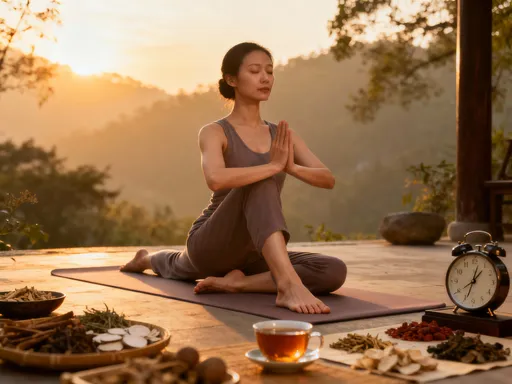
Timing enhances this synergy. Morning yoga sequences, especially sun salutations, generate warmth and alertness, supporting the body’s natural rise in yang energy as the day begins. Evening practices, focused on gentle stretches and restorative poses like child’s pose or legs-up-the-wall, encourage relaxation and prepare the body for rest—mirroring TCM’s emphasis on nurturing yin at night. Both systems discourage overexertion. In yoga, the principle of sthira sukham asanam teaches that a pose should be steady and comfortable, not forced. In TCM, excess—whether in work, emotion, or activity—depletes Qi. By combining these approaches, daily practice becomes a holistic rhythm: awakening energy in the morning, maintaining balance during the day, and restoring it at night.
Building Your Own Rhythm: A Practical Daily Framework
Creating a sustainable routine doesn’t require hours of time or special equipment. The goal is to design a simple, flexible structure that fits your life and supports your body’s natural cycles. Start with three key moments: morning, midday, and evening. In the morning, within 30 minutes of waking, drink a glass of warm water to stimulate digestion and hydrate the body. Follow with three to five minutes of deep breathing or gentle stretching—perhaps cat-cow poses or a few sun salutations. This signals the body to shift from rest to activity, aligning with the rising yang energy of the day.
At midday, especially if you work at a desk, take a short walk or step outside for fresh air. Even five minutes of mindful movement—standing, stretching, or walking slowly—can reset your focus and prevent afternoon fatigue. Pair this with a nourishing lunch, eaten without distractions, to support the stomach and spleen’s peak function. In the evening, prioritize winding down. Avoid screens at least one hour before bed. Instead, practice a few gentle yoga poses—seated forward bend, reclining twist, or supported bridge pose—to release tension. End with two to five minutes of quiet reflection or gratitude journaling. This routine is not fixed; it’s a template. Some days, you may do more; others, less. The power lies in consistency, not intensity.
Staying Consistent Without Perfection
One of the biggest obstacles to daily practice is the expectation of perfection. Many women abandon routines because they miss a day or can’t complete the full sequence. But consistency is not about flawless execution—it’s about returning, gently and without judgment. Life happens: travel, illness, family demands. The key is to adapt, not quit. Habit stacking—linking a new practice to an existing one—can help. For example, do three deep breaths after brushing your teeth, or stretch while waiting for the kettle to boil. Environment design also supports adherence: keep a yoga mat visible, place a journal on your nightstand, or set a gentle reminder on your phone.
Self-compassion is essential. When you miss a day, acknowledge it without criticism and simply return the next day. Over time, the benefits accumulate quietly: better sleep, steadier moods, improved digestion, and a calmer mind. These changes are not dramatic at first, but they are lasting. Women who maintain even a minimal daily rhythm often report feeling more in control, more present, and more resilient to stress. The body begins to trust the routine, and healing deepens at a cellular level. It’s not about adding more to your plate, but about creating space for what truly sustains you.
Conclusion: Wellness as a Living Practice
Wellness is not a destination, but a daily practice of returning to balance. The fusion of yoga and traditional Chinese medicine offers a timeless blueprint for living in rhythm with nature and the body’s innate wisdom. It doesn’t require drastic changes or expensive programs—just small, consistent actions that honor your energy, your time, and your needs. By embracing routine regularity, you cultivate resilience, clarity, and a deeper sense of calm that no quick fix can provide. Start where you are. Choose one practice—morning breath, evening stretch, mindful eating—and do it daily. Trust that over time, these quiet moments will weave into a stronger, more vibrant life. True well-being grows not in leaps, but in the steady rhythm of showing up, one mindful day at a time.